Feb 26, 2010

College Affordability Strengthens the Middle Class, says Biden


Today, Vice President Joe Biden released the Annual Report of the White House Task Force on the Middle Class, the findings of a committee that has spent the past year researching ways to improve the living conditions of working and middle class families. Among the most effective ways to help American families secure economic stability is increasing college access and affordability, the Task Force found.

“It has long been one of the core aspirations of middle-class families to provide their children with the opportunity to get a college education. Postsecondary education is strongly linked to higher earnings and greater economic mobility, offering one of the most reliable routes to a good career while providing a critical path into the middle class for children from lower-income families,” the report noted.

The Task Force’s findings include budget recommendations for the Fiscal Year 2011. They include capping student loan payments at ten percent of a borrower’s income and forgiving debt after twenty years, shifting all federal lending to the Direct Loan program, which would allocate over eighty billion dollars to need-based aid and access and retention programs, extending the American Opportunity Tax Credit, and making historic investments in community colleges and Minority Serving Institutions. The recommendation to shift lending to the Direct Loan program is the key feature in the Student Aid and Fiscal Responsibility Act, which passed the House of Representatives in September and is currently pending in the Senate.

“These findings highlight what millions of students and families already painfully know, that college costs are out of control,” said United States Student Association President Gregory Cendana, who attended Vice President Biden’s event releasing the report. “USSA is thrilled to see the Task Force recommending passage of student aid reform legislation that would put students over banks in the federal loan system. The Obama administration clearly recognizes the link between college affordability and a strong economy.”

The Task Forces’ findings come at the close of USSA’s Week of Engagement to pass a Senate companion bill to the Student Aid and Fiscal Responsibility Act. Students have spent the week writing letters-to-the-editor, calling legislators, and rallying on campuses in support of the legislation. USSA, and its 4.5 million student members at over 450 campuses nationwide, will continue advocating for this bill as well as the implementation of the Task Force’s findings in the final federal budget for FY 11.

Feb 22, 2010

USSA Supports National Day of Action to Defend Education

The United States Student Association (USSA) has always supported grassroots efforts that empower young people and raise awareness about issues in higher education. In keeping with this practice, USSA supports the March 4th Day of Action in Defense of Public Education. The event was inspired by the demonstration of student power during the University of California Board of Regents vote to increase fees 32%, tripling the cost of a UC education from a decade ago. Organizers of the March 4th Day of Action are working to expand that energy to a national campaign to fight for increased educational access.

In response to mounting state deficits, legislators and campus administrators have mitigated budget shortfalls on the backs of students by slashing higher education funding and raising costs. These fiscal policies are indicative of a larger political climate that fails to recognize the long-term social and economic value of an education, or the inherent right of everyone to better their own lives through the pursuit of a college degree. Students must work in a common effort against this historic divestment and unite with one voice to demand education as a right.

USSA calls on students nationwide to participate in this day of action by contacting your local organizer and getting involved in your area. We also urge students to use the day of action to propel two pieces of federal legislation forward that will expand access to education. A companion bill to the Student Aid and Fiscal Responsibility Act needs to be passed in the Senate to help ensure that the student loan industry works for students instead of big lenders. Additionally, the DREAM Act must pass, throwing open the college doors for thousands of deserving undocumented students. While we must achieve much more beyond what we can accomplish in one day, these actions will hopefully empower young people across the country to restore education to its preeminent position as the driving force behind social progress and economic prosperity.

USSA invites student leaders and activists from across the country to take part in a national student mobilization in Washington DC on March 23rd. As the culmination of our annual Grassroots Legislative Conference and National Student Lobby Day, students will be rallying on Capitol Hill to demand that higher education in our nation must be affordable and accessible to all.

Feb 19, 2010

State of the Student Union

On February 17, 2010, United States Student Association President Gregory Cendana delivered the organization’s annual State of the Student Union address:

“Students, higher education supporters, elected officials, members of the press, and coalition partners:

My name is Gregory Cendana and I am the President of the United States Student Association, the country's oldest and largest student-run, student-led organization. Representing over 4.5 million students at over 400 campuses nationwide, it is my honor to report to you that the State of the Student Union is on the brink of fundamental change.

In the past year, we have seen devastating divestment from higher education. State governments seem to view higher education spending as little more than budget items with distant payoffs and students as perpetual revenue streams for deficit reduction. Essentially, they are balancing their budgets on the backs of students. Federal spending has not kept up with these cuts. The Pell grant, the cornerstone of need-based aid, once covered 72 percent of the cost of college; today, that number has plummeted to 32 percent. Student borrowers are graduating an average of over 23 thousand dollars in debt into one of the worst job markets on record for young people. Due to continued legislative inaction from both state and federal governments, over 65 thousand undocumented students are denied access to college because of their citizenship. All of these factors are leading to ours being the first generation in decades to be worse off than our parents.

Students are not taking this lying down. Despite racking up mountains of debt while facing enormous tuition hikes and state budget cuts, college students have continued organizing to make education a right. This year, hundreds of thousands of students have mobilized to demand college access and affordability through weeks of action, lobby visits, campus rallies, and other tactics. These actions have been as visible as the massive protests across the University of California system last fall in response to the Board of Regents’ vote to increase fees by 32 percent, and just this past week, the Washington Student Association mobilized thousands of students on the steps of the state capital for the Rally for Our Future to ensure 15,000 students wont lose their state based grants. These actions have been as humble as door-knocking, phone banking and letter-writing campaigns on campuses across the country. From coast-to-coast, students and community members have unified to defend public education by organizing local “March 4 education” rallies on, you guessed it, March 4th.

I continue to be inspired by young people who can barely afford to stay in school giving their precious time and effort to fighting for college affordability. Their devotion to the student movement convinces me that we can and will make education a right.

We have had some big victories because of these actions. As President Obama noted in his State of the Union address, the Senate is about to consider student aid reform legislation, already passed in the House, that will fundamentally alter the student loan system. Under this bill, instead of subsidizing private lenders, the federal government will allocate over 80 billion dollars to need-based aid, access and retention programs, and investments in community colleges and Minority Serving Institutions. While this bill makes economic and common sense, it faces extreme opposition from big banks that don't want to see their profits lost to college affordability. Together, we must lobby the Senate to stand with America’s youth by passing student aid reform. It will take us one step closer to ensuring that financial burdens never weigh
down a students' ability to achieve a college education and brighter future.

USSA was pleased to see that, despite federal funding freezes for many important domestic programs, education spending has actually increased by 7.5 percent in the president's proposed budget. This is indicative of a changing political climate that recognizes the long-term economic impact of higher education. Students must pressure their elected officials to maintain these funding increases in Congress' FY11 budget.

As I previously mentioned, the challenges faced by undocumented students are made more severe by their denial of college access. We grow up with these students; they are our grade school classmates, our neighbors, and our friends. Yet, without the ability to go to college, they are left behind. The DREAM Act is a bill that will throw open the college doors for these students, allowing them to better their lives and contribute to their communities through education. USSA has supported this legislation since its inception in 2001 and cant stop and wont stop until it is passed.

We are on the brink of fundamental change. With a president in office who wants to lead the world in post-secondary graduation rates and a new level of student power unmatched in its organizing capacity or political influence, never before has the goal to make education a right been so within our grasp. But the moment is brief and our action is required. Start a DREAM Act coalition, take over your student government, lobby for student aid reform, write your newspaper, join a “March 4th Education” event in your area, and come to USSA’s Legislative Conference.

Together, we must unite to define this decade of student power and make education a right!

Thank you."
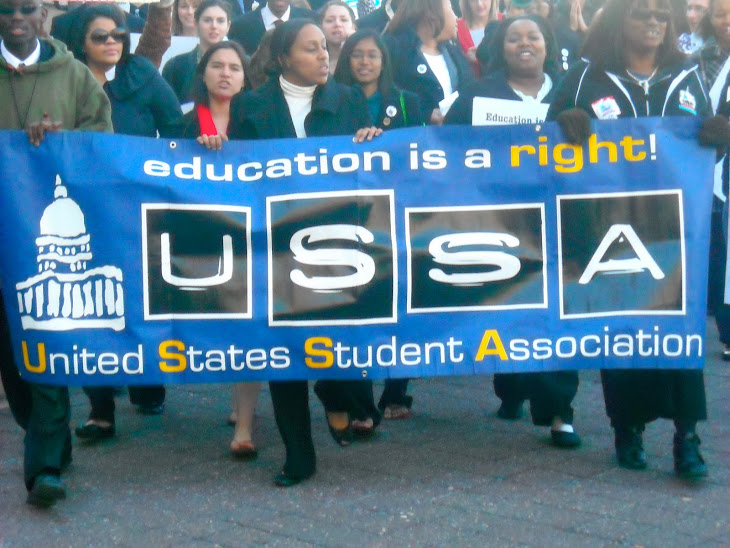
Feb 11, 2010

Write Your Own Page in History!

2010 is gearing up to be an exciting and successful year for higher education! To ensure you are a part of the historic movement to make education a right, be sure to attend USSA's 41st annual Grassroots Legislative Conference and National Student Lobby Day (LegCon) March 20-23 in Washington, DC. Hurry, early registration deadline is TOMORROW, February 12th. Statewide Student Association leaders are also encouraged to attend USSA's SSA Summit March 19-20 in Washington, DC.

Here are some other great ways for you to get involved in the fight to make education a right:

* Read about all the great actions students are taking to fight for college access and affordability by downloading the January edition of USSA's monthly newsletter, The Student Voice.

* The student voice is being amplified in the media! Download USSA's January media hits packet to read about USSA in the news.

* Do you want your voice heard in the media or in Congress? Submit your testimonial or an LTE to ensure your story is told to the press and decision makers!

* Help make this year's LegCon the best ever! Submit a workshop to USSA Training Director Danny Montes and educate your fellow students on a topic you're passionate about.

Together, let's make this the Decade of Student Power!

Feb 1, 2010

Students Applaud Major Investments in Obama's Budget, Express Concern for LEAP Elimination

Today, President Obama released his proposed budget for the Fiscal Year 2011, which continues his administration’s commitment to college affordability by increasing education spending by 7.5 percent. The budget proposes the transition of the Pell Grant to an entitlement program, strengthens the new Income-Based Repayment program, and makes key investments in community colleges and minority-serving institutions through the American Graduation Initiative. Additionally, the budget advances student aid reform policies found in the Student Aid and Fiscal Responsibility Act (HR 3221).

“The higher education funding increases in President Obama’s budget are indicative of shifting federal priorities that recognize the benefits of college investments,” said Gregory Cendana, President of the United States Student Association. The president’s budget proposal makes the Pell Grant an entitlement program, expands eligibility by one million students, and raises the maximum award amount from $5,350 to $5,710.

Moreover, the president has proposed lowering federal student loan repayment amounts from 15 to 10 percent of a borrower’s discretionary income, shortening debt forgiveness from 25 to 20 years, and allocating $642 million to minority-serving institutions. Students also support the elimination of the Federal Family Education Loan Program (FFELP), which will save tens of billions of dollars that will go towards need-based financial aid. This elimination is the main reform found in HR 3221.

Students are concerned about the elimination of the Leveraging Educational Assistance Partnership (LEAP) program and funding freezes for the federal TRIO programs and Gaining Early Awareness and Readiness for Undergraduate Programs (GEAR UP) and their effects on college access. Students nationwide will continue advocating for these and other youth priorities in the final federal budget. Fighting for a student-friendly federal budget will be a top priority during USSA’s 41st annual Grassroots Legislative Conference and National Student Lobby Day March 20-23rd, 2010.