Jun 25, 2010

Michigan Agrees to stop Unlawful Voter-Purge Programs

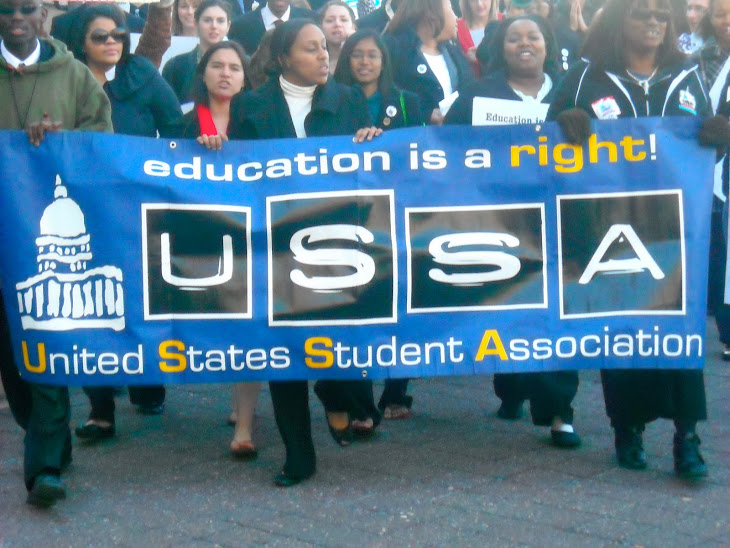
The state of Michigan has agreed to stop two voter-purge programs that unlawfully disfranchised thousands of Michigan voters in violation of federal law. The settlement agreement resolves a lawsuit filed in September 2008 by Advancement Project, the American Civil Liberties Union, the ACLU of Michigan and the law firm of Pepper Hamilton LLP on behalf of the United States Student Association Foundation (USSAF), ACLU of Michigan and Michigan State Conference of the NAACP.

“This is a true victory for Michigan voters,” said Bradley Heard, a senior attorney with Advancement Project. “Voter-removal procedures like those at issue in this lawsuit, which allow eligible and registered voters to be suddenly stricken from the rolls without notice, are bad for democracy. We are happy that the state of Michigan finally agreed to right these wrongful practices.”

Michigan’s voter-purge programs disfranchised Michigan voters with out-of-state driver’s licenses or voter-identification records associated with incorrect mailing addresses.

In October 2008, the U.S. District Court in Detroit found that the voter-removal programs likely violated the National Voter Registration Act of 1993 (NVRA). The court issued a preliminary block on a Michigan law requiring local clerks to nullify the registrations of newly-registered voters whenever their voter-identification cards were returned by the U.S. Post Office as undeliverable. Today’s settlement agreement permanently ends that practice as well as the practice of purging voters from the rolls who obtained out-of-state driver’s licenses without proof that the voter changed residence for voting.

The NVRA permits voters to remain on the voter rolls for at least two federal general election cycles after voter-registration cards are returned as undeliverable. The NVRA also requires that before states purge voters who obtain out-of-state driver’s licenses, states must verify that voters actually changed voting residence.

“The affirmative steps Michigan is taking will help restore confidence in an electoral process badly damaged by misguided practices that would have shut out lawful voters from the democratic process,” said Meredith Bell-Platts, an attorney with the ACLU Voting Rights Project. “The people of Michigan can now be assured that their votes will be counted regardless of whether the postal service could match your street address or when and where you got a driver’s license.”

Michigan’s voter-removal programs had a particularly detrimental impact on students and minority and low-income communities. These populations tend to be more transient and to live in multi-family housing or in dormitory settings where mail can be unreliable and unpredictable. Students often have driver's licenses from different states than where their colleges are located.

“This ruling ensures that, despite the transient lifestyle of college students, they will continue to have an influential voice in the electoral process," said Gregory Cendana, President of USSAF.

“Students and communities of color shouldn’t have their right to vote taken away because they didn’t receive their mail or have out-of-state driver’s licenses," said Kary Moss, Executive Director of the ACLU of Michigan. “We are relieved that Michigan has agreed to take steps to make sure all Michigan voters can make their votes count and their voices heard.”

"The resolution of this lawsuit in advance of the 2010 elections will help to eliminate a great deal of voter confusion, particularly in communities of color,” said Yvonne White, President of the NAACP Michigan State Conference. “Since our founding, we have constantly worked with our members and coalition partners to fight barriers to voting. We are very proud to have helped facilitate this important settlement agreement that ends the disfranchisement of thousands of our members and Michigan citizens."

Attorneys on the case are Heard of Advancement Project, Bell-Platts of the ACLU Voting Rights Project, Moss, Dan Korobkin and Michael Steinberg of the ACLU of Michigan, and Matthew J. Lund, Mary K. Deon and Deborah Kovsky-Apap of Pepper Hamilton LLP.

Jun 24, 2010

America's Youth are too Big to Fail

Overlooked in the debate over which institutions are 'too big to fail' for the sake of stabilizing America's economy is the future strength of our country: America's youth.

Young Americans nationwide will suffer lasting damage from the financial crisis.  My generation, so-called "Millennials," or people born after 1981, is on track to be the first generation in decades to be worse off than our parents.  It's no coincidence that this 30-year period has also been the Era of Deregulation culminating in a perfect storm of unemployment, education divestment, and debt that is disproportionately hindering the prosperity of America's youth.  That's why Congress must pass a vigorous financial reform bill that includes a strong Consumer Financial Protection Bureau (CFPB).

While the nationwide unemployment rate is hovering just under 10 percent, a staggering 37 percent of 18- to 29-year olds are unemployed or involuntarily out of the workforce.  This is the highest share among this age group in more than three decades and the effects of this crisis will be lasting.  A recent study by Lisa Kahn at the Yale School of Management found that even 15 years after college graduation, wages are still lower for those who entered to labor market when unemployment was high. 

Often when the economy is struggling, those out of work turn to education as a way to improve themselves and their job prospects.  Not this time.  The ubiquitous state fiscal crises have resulted in massive higher education budget cuts, forcing tuition and fee rates to soar sky-high, keeping a college degree out of reach for countless Americans.  Considering the innumerable economic and social benefits college graduates provide for their communities, efforts to raise the cost of college, especially during a recession, are misguided at best and fiscally devastating at worst.

As my generation, along with the rest of America, tries to keep its head above financial water, the heavy shackles of debt continue dragging down more and more young people.  The above-mentioned rising cost of college has forced two-thirds of students to take out loans, with the average graduate accumulating nearly 25 thousand dollars in student loan debt!  Private student loans, which lenders aggressively market to young students, include variable interest rates as high as 18 percent, rigid repayment plans, and increasingly high default rates. 

President Obama recently signed a law that reforms the student loan system by diverting public funds from private lenders to federal financial aid; still, this will not help the nearly three million American students who took out loosely-regulated private loans in 2007-08.  Left with enormous levels of private student loan debt, many college graduates begin their post-collegiate lives with no job prospects and already in a financial hole.  Instead of taking the job of their dreams, starting a family, or buying a home, many of today's college graduates spend what income they can generate on loan repayments and are moving back in with their parents. 

So what's the solution?  While there is no silver bullet, the passage of a strong financial reform bill would be an effective step forward.  Currently, Congress is crafting the final version of a financial reform bill, the likes of which have not been seen since FDR's New Deal.  The Senate, which recently passed the Restoring American Financial Stability Act (s. 3217), is working with members of the House of Representatives to finalize the bill before the Independence Day Recess.  Both the House and Senate versions include the establishment of the CFPB.  This agency would, for the first time in American history, be completely devoted to protecting consumers from the financially devastating practices of irresponsible lending.  Thus far, the Senate has accepted the House's proposal to give the CFPB the supervision authority over nonbanks that provide and offer private student loans, such as institutions of higher education.  

However, the Senate has rejected two key student provisions from the House that must be included in the final version.  The first is a proposal that would require private loans to be certified by higher education institutions and require students to be informed of any federal loans for which they are eligible.  This is critical because many students, who are unknowingly eligible for low-interest and affordable government loans, take out private loans that leave many young people in enormous debt.  Secondly, the Senate has rejected a House proposal to give the CFBP enforcement authority over banks that make a under $10 billion.  If this provision is not included, Sallie Mae, the nation's largest private student lender, will weasel out from under the authority of the CFBP.  This would be an extremely hypocritical and counterintuitive move, considering the federal government just spent months justifying historic reforms to the student loan system because of the financial strain lenders like Sallie Mae put on students.  Congress must pass a financial reform bill with a strong CFPB that continues the Obama Administration's policies of putting students over banks and investing in college affordability.

America's youth is a demographic that is too big to fail.  If Congress fails to act on financial reform, or does not create a strong CFPB, young people will continue to enter adulthood with suffocating debt levels, high unemployment, and few ways to help grow the economy.  Students have already been conducting in-district and Capitol Hill lobby visits making their voices heard on this critical issue.  The United States Student Association calls on Congress to stand with America's millennial generation and pass strong financial reform. 

The United States Student Association, U.S. Public Interest Research Group, and Demos released a briefing paper titled, "Risking our Future Middle Class: Young Americans Need Financial Reform" that details the need for a strong CFPB.

America's College Graduate Deficit

As the mid-term elections draw closer, the bandwagon of anti-deficit spending is getting crowded.  Self-righteous cries for shortsighted budget cuts masquerading as calls for fiscal responsibility are as common as denunciations of BP.  Federal spending in discretionary programs such as higher education, the argument goes, adds to the deficit and therefore makes America less safe.  

Nothing could be further from the truth.

American stability depends on our ability to grow a healthy economy driven by a well-educated workforce.  Last week, the Georgetown University Center on Education and the Workforce concluded that by 2018 the U.S. economy will have 22 million new jobs for college-educated workers.  This presents a once-in-a-generation opportunity to lay a new economic foundation built on the best and brightest workers, right?  Wrong.  The report also concluded that due to an utter lack of higher education prioritization, the U.S. is on track to being almost eight million college-educated workers short of filling this workforce capacity.  We will be running a deficit of 300,000 college graduates every year from now until 2018.  In order to make up the difference and meet President Obama's ambitious goal of leading the world in college graduation rates by 2020, the U.S. needs to produce 8.2 million college graduates in the next decade, which would require an increase in higher education spending of $158 billion.  While the recently enacted Health Care and Education Reconciliation Act invested about $40 billion into federal aid programs over the next ten years, that still leaves over a $100 billion to be made up for by state governments, not the most friendly of places for college spending.  The National Governors Association and National Association of State Budget Officers recently reported that in fiscal year 2010, 36 states cut higher education funding and 31 plan to impose additional cuts in fiscal year 2011.  Instead of working towards meeting America's workforce demand, state legislatures are appropriating as if there wasn't a gap to be filled.  In 2018 there will be 22 million new American jobs that, without a fundamental shift in higher education policy, will not be filled by American workers.   If there is a deficit Congress should worry about, it's our deficit of college-educated workers.   
 
This brings me to a decision the United States Student Association's Board of Directors made a few weeks ago.  The Pell grant, which allows millions of low-income students to attend college, currently faces a $5.7 billion shortfall.  Because the Pell grant is a discretionary spending item, Congress is under no obligation to provide it with funding.  So year after year, appropriators arbitrarily set Pell grant funding levels too low, resulting in a shortfall.  Funding to make up this shortfall has been included in the FY2010 Emergency Supplemental Appropriations Act.  The USSA Board of Directors, which is comprised of college students from around the country, voted to not support the bill.  The Board members recognized that the $227 billion in federal funding for operations in Afghanistan is a central reason why there has been little money for higher education programs since 9/11.   In fact, while national defense makes up over 20 percent of the federal budget, higher education comprises less than one.   To ignore this egregious spending disparity and blindly accept war appropriations as a legislative vehicle to fund the Pell grant fails to examine the root cause of why the grant is suffering from a massive shortfall in the first place.  The nation's neediest students deserve better than arbitrary funding levels that are reliant upon defense spending breadcrumbs in the federal budget. USSA supports Pell grant funding, but in a responsible way that ensures stability and predictability for students and families.  President Obama's proposal to make the Pell grant mandatory funding would provide the kind of investment in today's student that will drive tomorrow's workforce.

Another policy that would move this country closer to once again leading the world in college graduation rates is passage of the Development, Relief, and Education for Alien Minors (DREAM) Act.  This legislation would provide a pathway to citizenship for qualified undocumented students who complete two years of higher education or military service.  Besides the primary reason that everyone, regardless of their citizenship status, has a human right to an education, the DREAM Act is sound workforce development policy.  71 percent of public colleges and universities recently surveyed by the National Association of College Admission Counseling said they received applications from undocumented students.  In fact, each year, thousands of undocumented students apply to college; many, however, are rejected because of their immigration status.  These are students who could potentially help meet 2018's workforce demand, ensuring America's economy and global competitiveness stay strong.  The U.S. Supreme Court has ruled that undocumented students have a Constitutional right to a K-12 education, so why not extend this right to a higher education?  Why invest a decade of time and resources on an undocumented child only to deny them the chance to pursue a college degree?  We are shooting ourselves in the foot by trying to grow and stabilize our economy while denying thousands of potential college-educated workers the opportunity to join the American workforce.

Congress should be afraid of deficits, but not just budgetary ones.  America's college graduate deficit is a sleeping giant that is not receiving its due attention at a time when state and federal action is required.  Higher education has been used as a budget-balancing chopping block by legislators at our workforce's detriment.  To lead the world in college graduation rates and meet our full college-educated workforce potential, federal and state leaders must act with political courage and prioritize education as a human right and economic imperative.

Jun 23, 2010

For-Profit Universities Face Increased Congressional Scrutiny

This week, higher education lawmakers called for a Government Accountability Office (GAO) review of for-profit universities.  The scrutiny comes after a House Education and Labor Committee hearing in which the Education Department Inspector General raised concerns about accrediting agencies’ oversight of the credit hour policies at institutions of higher education.  This greatly impacts for-profit universities because, although they comprise only ten percent of total education enrollment, they account for about a quarter of all federal student aid disbursements, the amount of which is determined by credit hours.


Senators Tom Harkin (D-IA) and Richard Durbin (D-IL) joined Representatives George Miller (D-CA), Timothy Bishop (D-NY), and Ruben Hinojosa (D-TX) in asking the GAO to assess the quality of for-profit institutions, as well as how much of their revenue is comprised of federal student and other funding sources.  “With the average college student borrower graduating nearly $25,000 in debt into one of the worst job markets on record, it is critical that the federal government ensures integrity and efficiency in the management of financial aid at for-profit universities,” said United States Student Association President Gregory Cendana.


The hearing comes soon after former students filed a class-action lawsuit against the Illinois School of Health Careers, a for-profit provider, after they completed a nursing assistant program with federal financial aid, only to find the program was not approved for them to receive state certification.  Incorrect information like this is one example of why Congress is continuing its scrutinizing of the industry.  

Jun 18, 2010

American College Graduation Rates and Workforce Development in Serious Jeopardy

This week, the Georgetown University Center on Education and the Workforce released a dire report on the future of American college graduation rates and workforce needs.  The study found that by 2018, the economy will have jobs for 22 million new college-educated workers; however, based on current projections, there will be a shortfall of three million postsecondary-educated workers and 4.7 million postsecondary-certified workers.  “The U.S. is on a collision course with the future,” concluded the report’s authors.

If current graduation rates continue, there will be a deficit of 300,000 college graduates a year based on the workforce capacity of 2018.  To meet this capacity, American colleges and universities need to increase the number of degrees they confer by 10 percent annually.  

“The threat of continued divestment from higher education presents one of the greatest social and economic challenges to our generation,” said United States Student Association President Gregory Cendana. “Young people must mobilize to advocate for local, state, and federal policies that invest in college education and workforce development.”

During his first State of the Union Address, President Obama ambitiously announced his administration’s goal to have the United State lead the world in college graduation rates by 2020.  The Georgetown study found that for this to happen, American colleges and universities need to graduate 8.2 million students, a task that would require an estimated increase of $158 billion in higher education spending over the next decade.  Instead of making these investments, however, a recent report from the National Governors Association and National Association of State Budget Officers found that in fiscal year 2010, 36 states cut higher education funding with 31 states planning to impose additional cuts in fiscal year 2011.  

USSA, representing 4.5 million students nationwide, will continue advocating for state and federal investment in higher education, as such policies are necessary for the future well being of the U.S. economy and workforce.

Jun 8, 2010

"We are a strong, diverse community"

USSA President Gregory Cendana discusses the DREAM Act, student aid reform, and more on the Bob Kincaid show:

"I think what's different about this moment versus the last ten years when [the DREAM Act] was introduced is that there has been an emergence of immigrant youth and ally activists that have been pushing the envelop and elected officials to say 'this is really important.'"

Jun 3, 2010

My Arizona, My Home

By Teresa Mabry, USSA Women of Color Chair

The Day Governor Brewer decided to make a political play instead of the morally correct decision for the State of Arizona, and the people of Arizona, I could not  believe what had just happened. Why was it signed?  Lets not even ask that question.  We know.  The reason has come to a realistic light now that her campaign signs hang across the state. SB1070 is not a “Brown” issue, it is a human issue.  Arizona is becoming a state in which people of color and immigrant communities are being legally criminalized and profiled as a result of a political move, at the cost of the people.  I say the people because, again, this is a human issue. And yes, I have read the bill.
  
I refuse to be scared, I refuse to stand by, hold my tongue and allow the suffering to continue. I refuse! Arizona is my state, my home. No longer will unconstitutional and racist legislation, or legislators, be tolerated! No longer will ignorant, hateful statement, nor actions such as Tom Horne's ignorant comments on Dolores Huerta be tolerated or passed off. No longer can you or will you be able to discount our communities.  You’ve been looking for an alternative, my dear State of Arizona, and instead of choosing a viable option like the DREAM Act and Comprehensive Immigration Reform the decision was made to take us back in time. You see the people across the Nation and their actions, yet you refuse to hear them, but very soon you will feel them. Yes, this piece of legislation has already taken a toll on the State’s economy, but that feeling is only financial. You see, while this piece of legislation is hateful, racist, and intended to create fear, the stance the movement is taking against it and ones like it is one of love; a love for our fellow community members and the understanding and ability to continue  the progression towards a just society.  Yes, students and young people alike are at the forefront of this movement, not in an attempt to get out of classes, but in the realization that this place we call home is no longer safe, that we students we are affected by terrible legislation and, as students and contributing community members, we have a responsibility to care for one another and to love one another. Remember the DREAMers who were arrested in McCain’s office?  To say they risked deportation to get out of class would be a complete discredit to their bravery. To say those thousands of people who came across the nation to Phoenix, Arizona May 29th, 2010 came to feel the spring heat would be a blatant lie. 

This movement will continue to be one of Love and will continue to progress. My home will no longer cause me pain when I think of the occurrences happening in the state. Yes we will move forward, and the movement will certainly progress, because of Love.  It was Love that those DREAMers risked deportation, which for some meant their lives. It was Love that brought thousands of people to the desert to take a stance against SB1070 on May 29th, 2010. It will continue to be Love that keeps this movement going forward. Saturday May 29th, 2010 renewed my faith, and hope in you Arizona. Love with the understanding of what we know, what we need, and what we want from the society we are creating. My Arizona, my Home.

Jun 2, 2010

The Fourth Mile

By Monique Teal, USSA National Field Director

I am an organizer for many reasons. One: every right and privilege I enjoy was fought for. Whether in the last 100 years or 100 days, my entire life has been shaped by the courage and sacrifice of others. Two: my grandparents taught me that people are worth fighting for, no matter the situation. After watching them work for the rights of everyone from children to recovering addicts to special needs adults, if there was a way they could help, they did. I have long felt a sense of obligation to continue that legacy. Third: I enjoy it. I love the people I meet and the experiences I have. But around the 4th mile of Saturday's march against SB 1070, none of that was enough to keep me walking.

It was in the high 90s (maybe even 100 degrees), I am severely out of shape (community conditions for 100 Alex), and even with the regular water intervals (thanks puente, ndlon & tonatierra), I was completely dehydrated. I was ready to quit, for real. I slowed my pace and was enveloped by the crowd. Then, randomly, a hand grabbed mine. I look down and this kid, maybe 6 years old, drenched in sweat (and something that looked suspiciously like ice cream), his face illuminated with the best toothless grin I have seen in awhile, had taken a hold of me. Honestly, I was taken aback. I mean, I'm not really a "child" type of person. But then I got it. I walked the last couple miles purposefully, sometimes holding Myke's (I never got his name, so I named him) hand, most times not. But I walked the entire route and looking back, I would have walked further because at that moment I realized with full force that nothing I had done or was going to do during my organizing life was about me. I hope Myke continues to share that smile and maybe, someday, he'll start a college term paper with "It's hard to believe one hundred thousand people once had to march six miles in the desert for human rights..."

Jun 1, 2010

Love as an act of defiance

By Monique Teal, USSA National Field Director

Before leaving for AZ, I was anxious and convinced that I was unprepared for what I anticipated to be a torrent of anger centrally located in the AZ desert. The flight into the state did nothing to assuage my fears, as within minutes of taking off, a very angry (old, white) man proceeded to yell at me until the flight attendant told him he was upsetting passengers. This incident was all I needed to justify my apprehension and distaste for the state. It also set me up to mentally prepare for battle. I assumed that the man on the plane (and the folks in the news) were the norm in AZ and my 21st century political carpet bagging was not going to go over well with folks who were convinced they were the only ones deserving of rights. The same night, another (straight, white) man accosted myself and a current student (and bomb activist) about how youth didn’t know anything about politics, that black people had a chip on their shoulders (especially me apparently) and the undocumented people (illegal aliens in his vernacular) deserved any profiling they got. And much worse. We fought back through dialogue and two hours later realized that this “gentleman” was never going to get it because he didn’t want to get it. Day one and I despised AZ.

Fast forward to this moment. In the last two days I have met some of the most extraordinary activists (and some organizers) and people. From the family that has taken me in for the week to the students who actively and publicly challenge heteronormative culture and throw sign making parties while they discuss current events, intelligent and compassionate people, folks whose love of the people and passion for social justice envelops everyone around them, have surrounded me. It's impossible to not feel better in their presence. Strangers have accepted me into their homes and lives and have been so gracious, it is overwhelming and I find myself overcompensating. I met a student who has been in the US for 15 years and is about the graduate; however, she has to worry about what to do when her visa runs out in two years. She has already been denied residency twice. I reconnected with the Trail of DREAMs students and was able to steal a moment to hear about their latest travels- all while holding hands. I was introduced to a Pima Community College student who helped organize high school students to protest the anti- ethnic studies bill. With everyone person I meet, and every space I enter, I am overwhelmed by the amount of love for each other and communities so many folks have- and how easily and regularly it is expressed and embraced.

So quickly, I have already learned a lesson about the spirit of a place. It isn’t held in hate. At least in AZ, students and organizers overcome the brutality of a few by releasing love. Tomorrow, I join them. Together we will defy the criminalization of immigrants and the attack on people of color by showing our love as we march through the streets of Phoenix.